technical seo
8 Proven Digital Marketing Platforms for Small Businesses (2026)
Discover top digital marketing platforms for small businesses. Boost your strategy with tools tailored for your needs. Find out which excels.
Published: 10/22/2026
8 Proven Digital Marketing Platforms for Small Businesses (2026)
You've wasted hours on all-in-one marketing tools that promise the world but forget small businesses have different needs. You've shelled out cash for complex platforms, only to find out that half the features are as useful as a chocolate teapot. But the core issue lingers: your digital presence still feels like a ghost town, and you're left scratching your head.
The backdrop is even more stark than you realize. Over half of small businesses fumble with their digital marketing efforts, unable to cut through the noise. It's not just a missed opportunity, it's a recipe for staying stuck in the shadow of competitors who get it right. The digital world is cutthroat, and your business can't afford to be the wallflower at the dance.
That's where this article comes into play. You'll walk away armed with a list of eight powerful platforms that will actually propel your digital strategy forward. From tools that finally make email marketing cost-effective to platforms that put e-commerce on easy mode, you'll discover exactly what your small business needs and what to skip.
Still skeptical about whether the usual suspects will cut it? Prepare for a shake-up: it's not about having the most tools, but the right ones. The right digital marketing platforms can be a standout, but only if they truly fit your small business's needs.
⚡ Quick Answer
Why Most Digital Marketing Lists Miss the Mark
Most lists about digital marketing platforms cater to giants. Small businesses don't need the same tools a Fortune 500 company uses, nor can they afford them. Instead, they need tailored solutions like HubSpot for marketing automation or Mailchimp for email campaigns, built for their scale and budget.
Here's what to evaluate:
| Factor | What It Measures | Why It Matters | How to Evaluate It | Weight/Priority |
|---|---|---|---|---|
| Cost | Budget compatibility | Determines affordability | Check the pricing page for tiers | High |
| Features | Range of tools offered | Ensures toolset meets needs | Match features to your goals | High |
| Ease of Use | User interface and learning curve | Impacts productivity | Test with a free trial | Medium |
| Integration | Compatibility with existing systems | Ensures smooth workflow | Check API and tool compatibility | Medium |
| Support | Quality of customer service | Critical for problem-solving | Review support channels | Low |
The Hype vs. Reality
Marketing lists often glorify big names but forget about the specifics. Not every small business can tap into extensive platforms like HubSpot's premium options. The high cost and complex features can be overkill. Instead, focus on platforms fitting your actual needs. HubSpot offers entry-level solutions too, but ensure they're aligned with your scale.
Feature Creep Alert More features don't always mean better. Identify what you truly need and avoid paying for bells and whistles that complicate your workflow.
Evaluation Criteria
Cost, features, and user-friendliness should be your guiding principles. With tools like Mailchimp, small businesses can efficiently manage email marketing without breaking the bank. Conversely, pricey platforms offer more than necessary, running the risk of overwhelming instead of help. Evaluate these aspects within the context of your specific business requirements.
Now, let's shift gears. To pick the right platform, learn to separate hype from substance in our next section: "How to Evaluate Digital Marketing Platforms."
How to Evaluate Digital Marketing Platforms
Most businesses trip over the ROI because they don’t know how to measure it. They think buying the latest tool guarantees success, it doesn’t. Start by understanding what a digital marketing platform delivers for return on investment. If you can’t calculate it, you’re probably burning money. A user-friendly interface is the other big one; if you're swimming through confusing menus daily, even the best features won’t save you.
Focus on Real Integration Make sure the platform integrates with your existing tools. A smooth connection with your CRM or email marketing software can be the difference between simplify workflows and a logistical nightmare.
Use this framework:
| Factor | What It Measures | Why It Matters | How to Evaluate It | Weight/Priority |
|---|---|---|---|---|
| ROI | Financial return | Ensures investment pays off | Analyze past performance data | High |
| User Interface | Ease of navigation | Determines user efficiency | Test usability with free trials | High |
| Integration | Compatibility with other tools | Facilitates simplify operations | Check tool compatibility lists | Medium |
| Customer Support | Help and troubleshooting | Aids in resolving issues quickly | Read reviews and test response times | Medium |
| Analytics Tools | Data tracking capabilities | help data-driven decisions | Run a trial report | Medium |
Neglecting customer support can sink your operations. Imagine a complex issue arises, and you’re stuck with a chatbot. You’ve got to know who’s got your back before you commit. Now, HubSpot claims to be the powerhouse for small businesses. Let's dissect why that might be true.
1. HubSpot: The Small Business Powerhouse
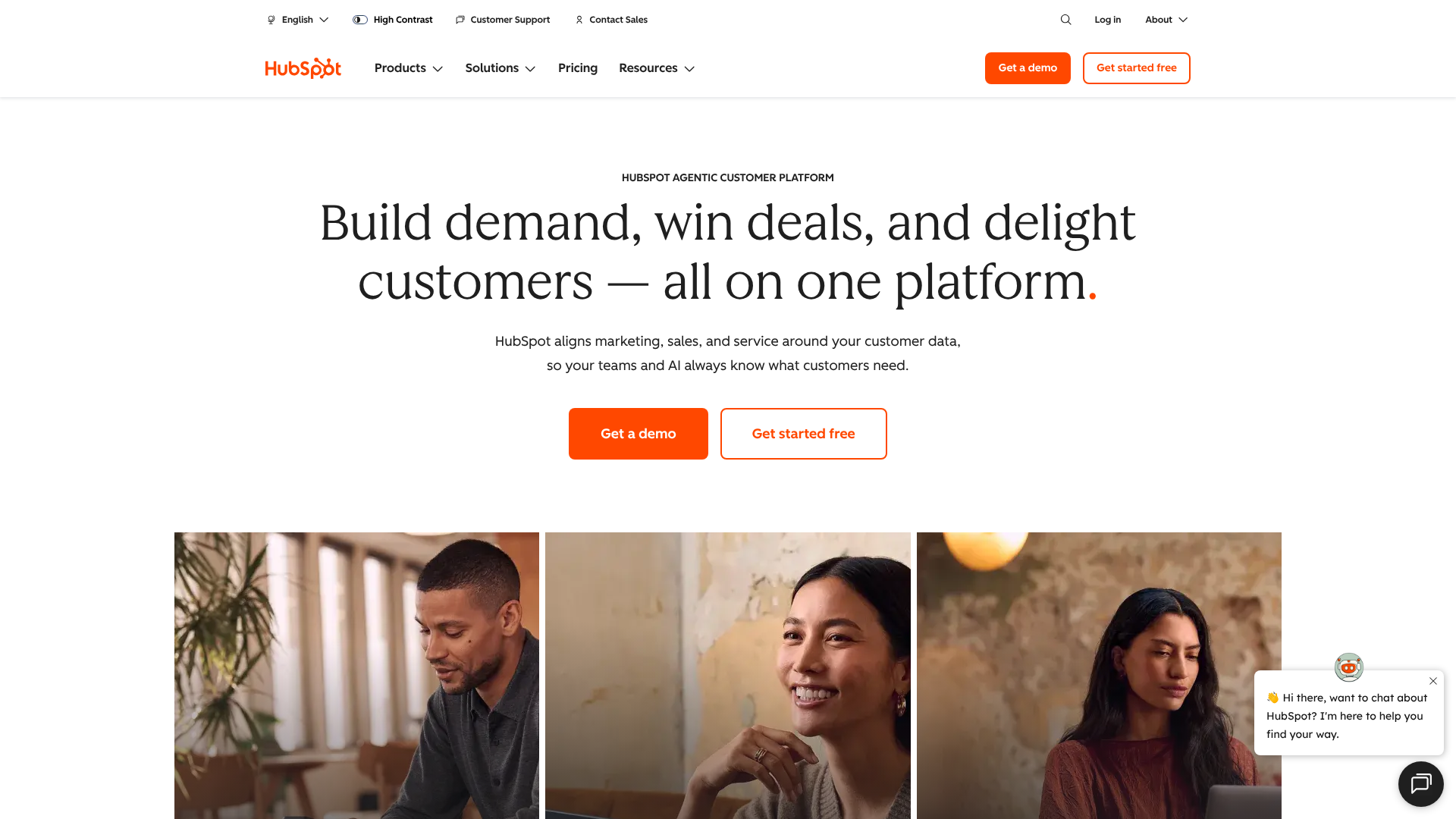
HubSpot isn't just a tool; it's like having a full-time marketing team in your pocket. For small businesses, navigating the intricate world of digital marketing platforms can feel like opening Pandora's box. HubSpot simplifies this with its comprehensive suite of CRM and marketing features tailored specifically for growing businesses. It's the Swiss Army knife of online marketing platforms, offering everything from email marketing software to analytics tools.
The platform is scalable, ensuring you’re covered from your startup phase to your unicorn dreams. Its range of tools, covering SEO, social media marketing, and content marketing platforms, means you won’t need a separate app for every aspect of your strategy. This consolidation is where HubSpot shines, bringing together disparate marketing efforts into one neatly organized package.
The Budget Reality Check HubSpot’s premium features can feel like a splurge, which might strain budgets as you expand. But its free CRM can cover a lot of ground for startups needing cost-effective solutions.
However, the scalability comes at a price. As your needs grow, so does the cost. Premium features can lead to a higher monthly bill, which is a limitation for businesses watching their pennies. But ignoring HubSpot’s potential because of cost alone is like skipping a good book because it’s heavy. The ROI often outweighs the initial wallet strain, especially when your marketing engine runs as smoothly as a Swiss watch.
Understanding what your business needs to thrive is crucial. HubSpot's extensive capabilities offer a significant advantage, but the alignment between your growth stage and their pricing tiers will determine the true value. If you're at the point where investing in comprehensive digital advertising solutions is the sensible next step, explore what HubSpot brings to the table for small business marketing tools.
HubSpot sets the stage, but how do you tackle affordability without sacrificing features? Up next, let’s explore Mailchimp, a platform that balances cost with strong offerings.
2. Mailchimp: Affordable and Feature-Rich
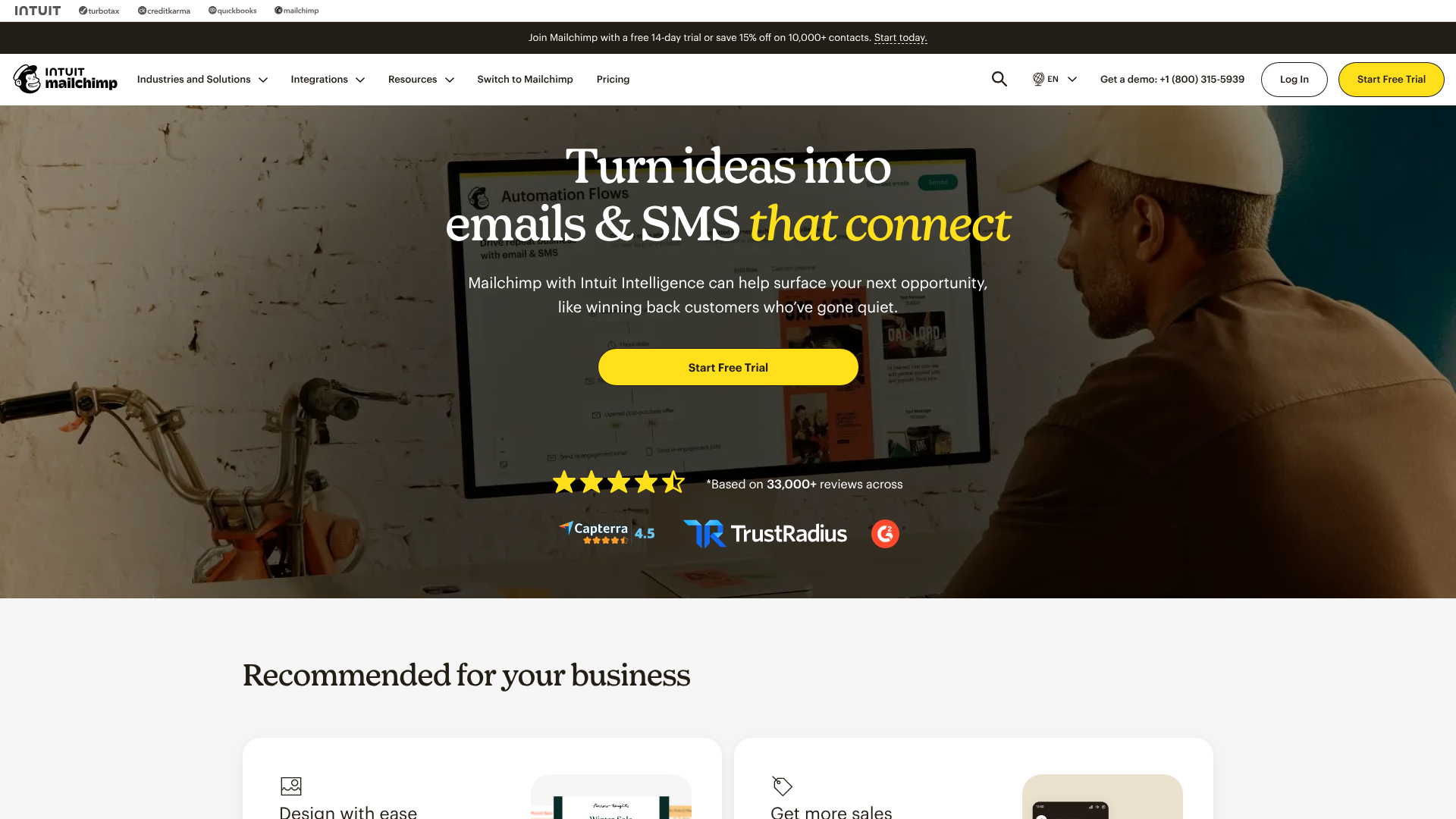
Many small businesses overlook email marketing, thinking it's passé. Yet, that's where Mailchimp shines. It remains one of the most effective online marketing platforms, offering a strong free tier. If your budget is thin, Mailchimp provides a compelling entry point to digital advertising solutions without breaking the bank.
Mailchimp's strength lies in its user-friendly interface. You don't need to be a tech wizard to handle its features. From creating captivating email marketing campaigns to integrating various social media marketing tools, Mailchimp simplifies it. It's like having a Swiss Army knife for your small business marketing tools, all within one platform.
Beware the Automation Trap The free plan limits automation. If you're planning to scale, consider upgrading. Mailchimp's paid plans offer more strong automation features, crucial for businesses looking to simplify repetitive tasks.
However, the limitation of Mailchimp is clear: the free plan's automation is minimal. It might suffice if you're managing a small list, but as your business grows, you'll hit a ceiling. You'll need to decide if the free features meet your needs or if the cost of upgrading makes sense for your business model. According to Mailchimp's pricing page, their premium plans offer more advanced tools, including enhanced analytics tools and SEO tools, which are valuable for more comprehensive campaigns.
Understanding these trade-offs is crucial before diving in. As you explore options, think about how Mailchimp aligns with your long-term goals. Next, we’ll explore how Shopify caters specifically to e-commerce needs, broadening the digital toolkit for selling online.
3. Shopify: Best for E-commerce
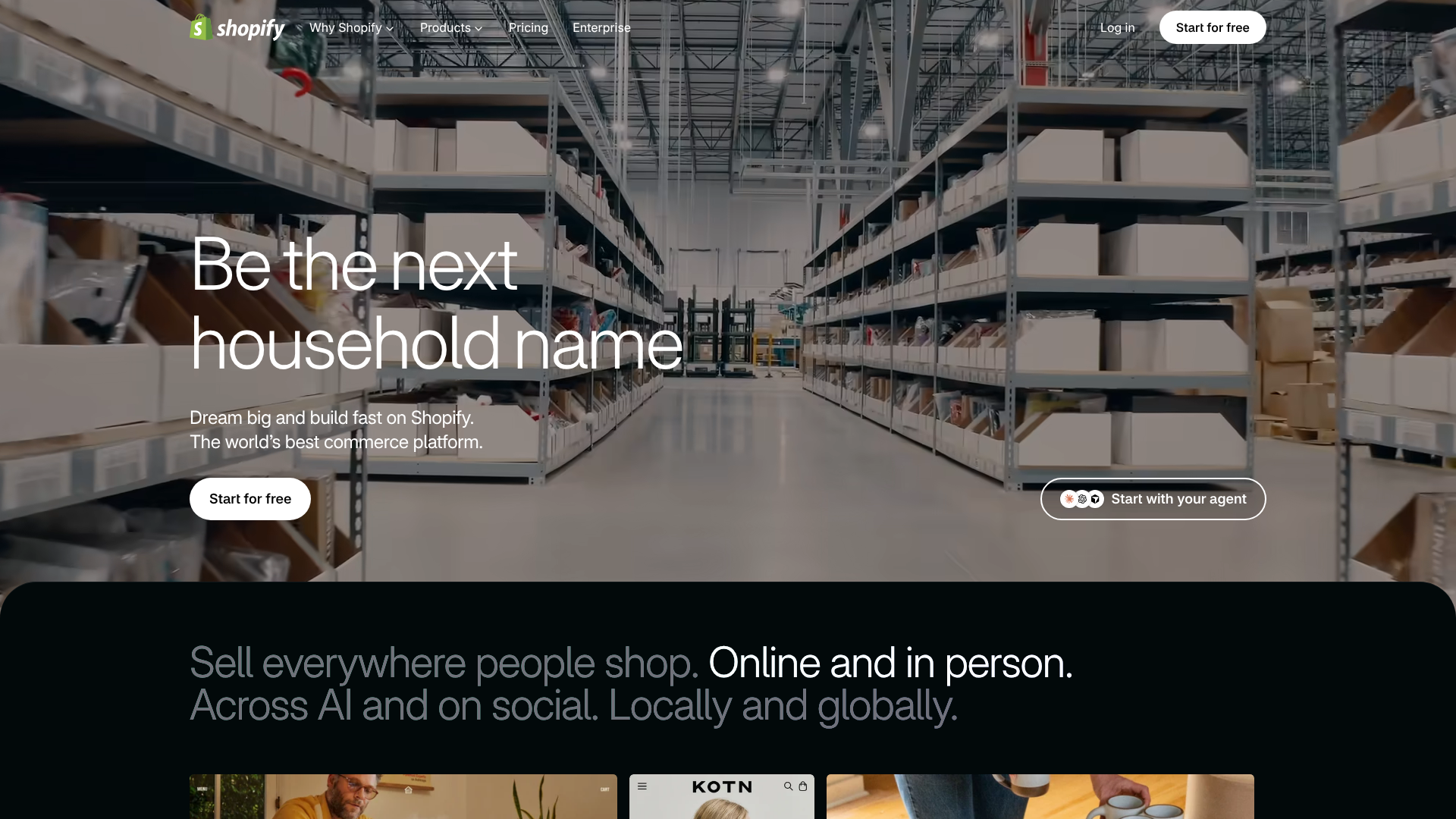
Setting up an online store shouldn’t feel like rocket science. Enter Shopify, the e-commerce platform for small business marketing tools that cuts through the noise. Shopify delivers integrated marketing and sales tools that make setting up your online storefront as painless as a Sunday morning. Whether it's designing a responsive website or leveraging social media marketing tools, Shopify provides everything you need, all under one roof.
But we’re not just talking about the basics here. Shopify excels at offering a suite of digital advertising solutions that can scale with your business. Its range of content marketing platforms and SEO tools aid in pulling organic traffic, while its email marketing software keeps your customers engaged. Sure, many platforms promise smooth e-commerce setup, but Shopify delivers it. The platform even offers analytics tools to help you decipher customer behavior, optimizing your site for better performance.
Transaction Fees: The Hidden Cost Watch out for transaction fees unless you use Shopify Payments. It's a trade-off that can catch small businesses off-guard.
Of course, there’s no such thing as a perfect platform. Shopify's biggest drawback is its transaction fees. Unless you're using Shopify Payments, those fees can chip away at your profit margins. Despite this limitation, Shopify remains a top pick for e-commerce thanks to its comprehensive toolset. It’s the kind of platform that doesn't just support your business; it propels it forward. Plus, with plans that allow you to start selling quickly, it’s clear that getting your store online shouldn’t be a marathon.
Navigating through analytics shouldn’t be daunting either, which is where Google Analytics comes into play. Let’s dive into how it offers deep insights without breaking the bank.
4. Google Analytics: Deep Insights for Free
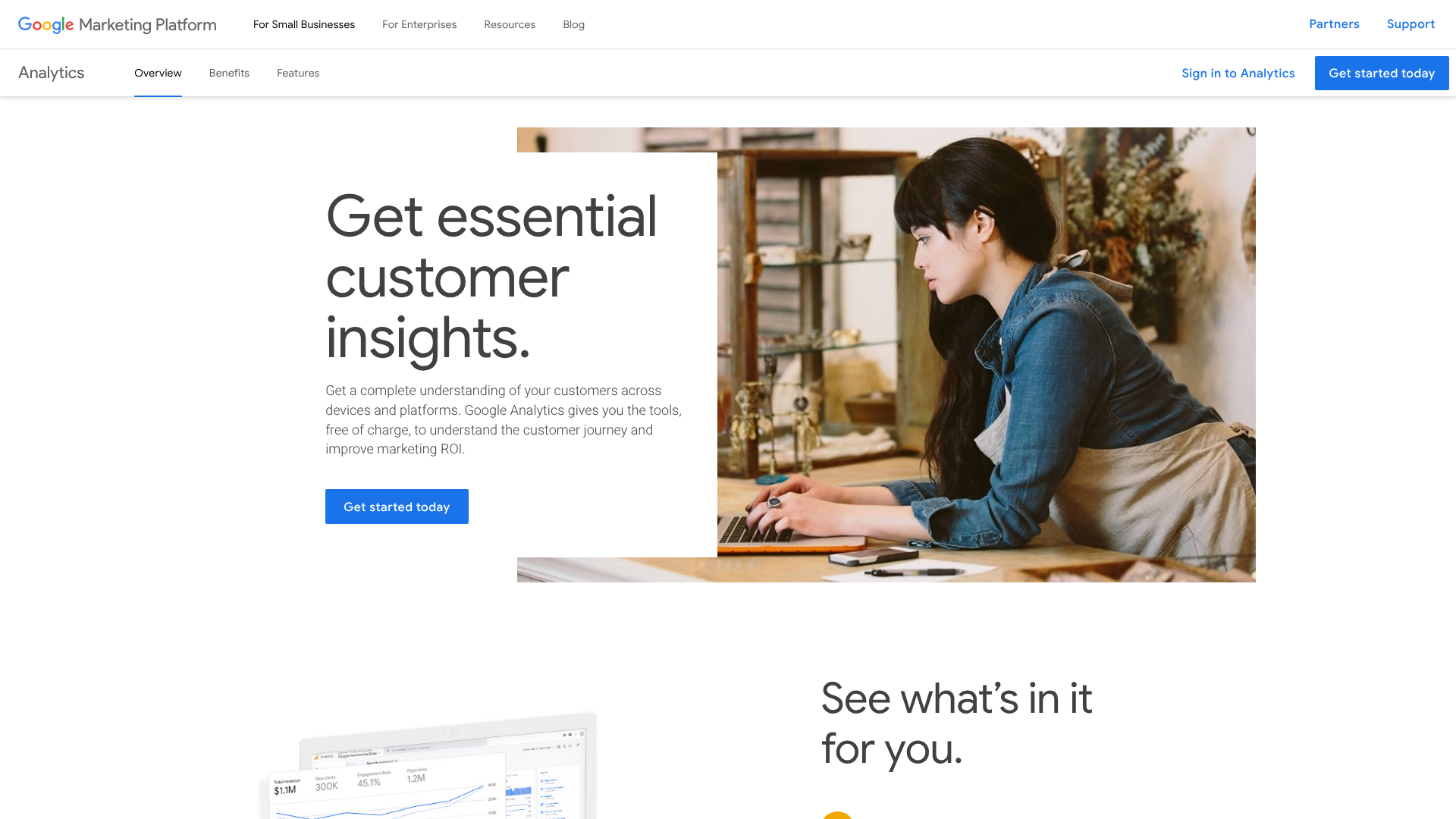
If you're not using Google Analytics, you're flying blind. It's the go-to tool for small businesses needing a view into their online marketing platforms without the price tag. The best part? It's free. It provides comprehensive data tracking across your website, lending insights into user behavior, traffic patterns, and conversion pathways.
The learning curve is steep, no doubt. You can spend days just trying to figure out how to set up goals or filters. Yet, the power it gives you in analyzing your digital advertising solutions and social media marketing tools is unmatched. The irony? Many businesses use it superficially. They check the number of visitors and call it a day, missing out on the granular data that could inform smarter strategies.
Don't Miss Key Insights Most users underutilize Google Analytics by ignoring customizable reports. Tailor your dashboard to track what's relevant for your business goals, like specific ad campaign performance or social media referrals. This step turns data into practical tips.
Expect the unexpected with Google Analytics. It often surprises you by showing that your most trafficked page isn't your homepage or your latest blog post, but some obscure page you forgot you had. It's these insights that can reshape your content marketing platforms, refocusing efforts where they make the most impact.
After mastering the basics, you'll find that Google Analytics becomes an essential part of your digital toolkit. It's like learning a foreign language, effortful but rewarding, opening new avenues for understanding your audience's behavior. Once you've got the hang of it, you're ready to dive deeper into competitive analysis with tools like SEMrush. That's where the fun begins.
5. SEMrush: SEO and Competitive Analysis
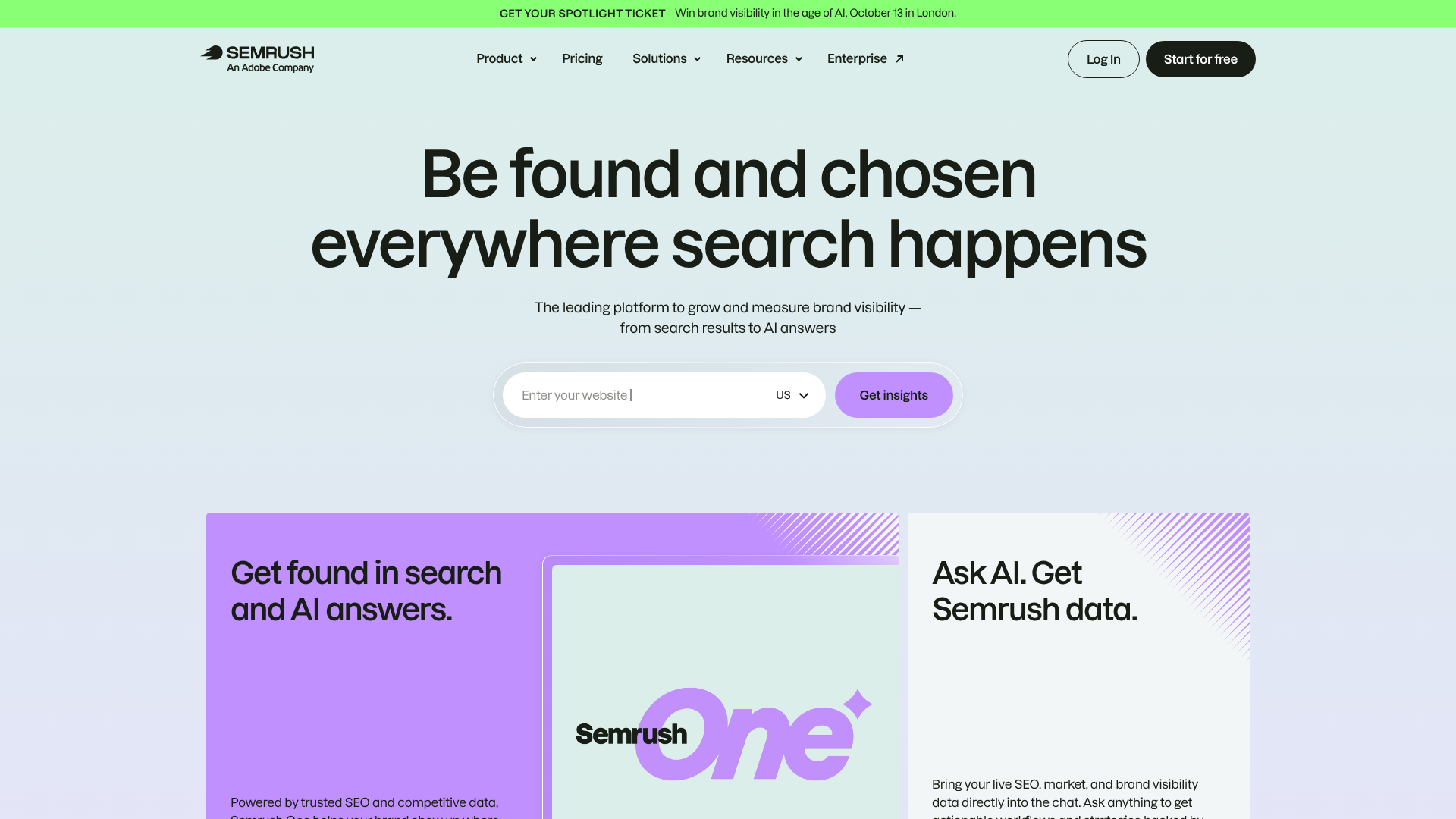
Everyone talks about winning the SEO game, but few play it smart. SEMrush offers a toolkit that more than covers the bases. From keyword research to backlink analysis, SEMrush defines what it means to be an SEO Swiss Army knife. You're not just getting a list of keywords; you're get a wealth of insights that reveal your competitors' strategies. But here's the kicker, knowing what everyone else is doing doesn't get you ahead unless you act on it.
If you're serious about SEO, SEMrush delivers real-time competitive analysis features that let you dissect your rivals' playbooks. You can see exactly who's linking to their sites and how they're ranking. But the power comes with a price tag. For small businesses juggling tight budgets, SEMrush might feel like a splurge. But if you're in a crowded market, not having it could cost you more.
Why does SEMrush stand out among other digital marketing platforms? It offers over 50 integrated tools, moving from SEO metrics to content marketing and beyond. You're essentially arming yourself with a comprehensive digital advertising solution that covers all angles. But no tool is perfect. SEMrush can be overwhelming for beginners, often requiring a learning curve that eats into your time, time that small businesses might not have.
Cost Reflects Value SEMrush feels expensive, but compared to hiring a full-time SEO analyst, it's practically a steal. You get insights your competitors don't even know exist.
But here's the inevitable question: what's next after mastering SEO? Once your site is optimized, turning your focus to other aspects of digital marketing becomes essential for growth. That's where social media management tools like Hootsuite come into play. It’s time to ensure your social media strategy is just as strong as your SEO game.
6. Hootsuite: Social Media Management Made Easy
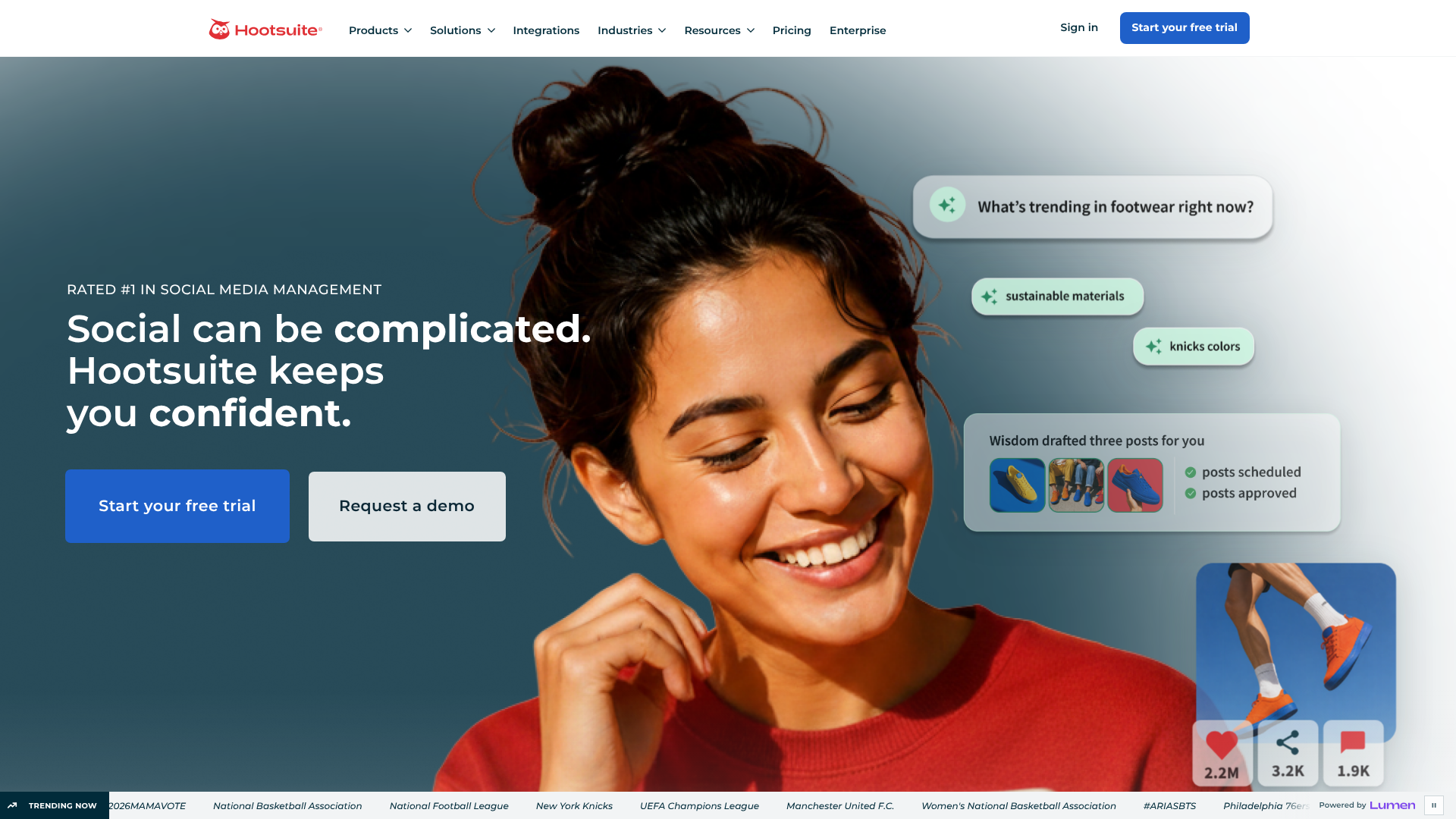
Hootsuite isn't about just posting. It's about orchestrating your entire social media strategy. With Hootsuite, managing multiple social accounts becomes a breeze, allowing you to schedule posts efficiently without breaking a sweat. The platform supports a wide array of social media marketing tools that cater to small business marketing needs, streamlining your digital advertising solutions through a single dashboard.
The real beauty? You can draft posts, select the target platform, and decide exactly when your content hits the feeds. For small businesses, this means more time to focus on growth, less time toggling between apps. But don't be fooled by the simplicity, this isn't just a superficial content calendar. It’s your online marketing command center. However, the limitation surfaces when you dive into analytics. The lower-tier plans offer limited insights, hampering deep strategic analysis.
Don't Rely Solely on Basic Analytics Hootsuite's basic analytics might leave your strategy blind-sided. If data depth matters, consider upgrading or pairing with dedicated analytics tools.
Even with its shortcomings, the platform's integration capabilities are strong. Hootsuite connects smooth with over 2,300 applications, ensuring your existing content marketing platforms and email marketing software are in sync. Yet, you'll need to weigh the trade-offs, especially if detailed analytics are crucial for your campaigns. You can explore more about how it fits your needs at this overview of Hootsuite benefits. Up next, it's time to elevate your design game with Canva, the go-to solution for effortless marketing materials.
7. Canva: Design Marketing Materials Effortlessly
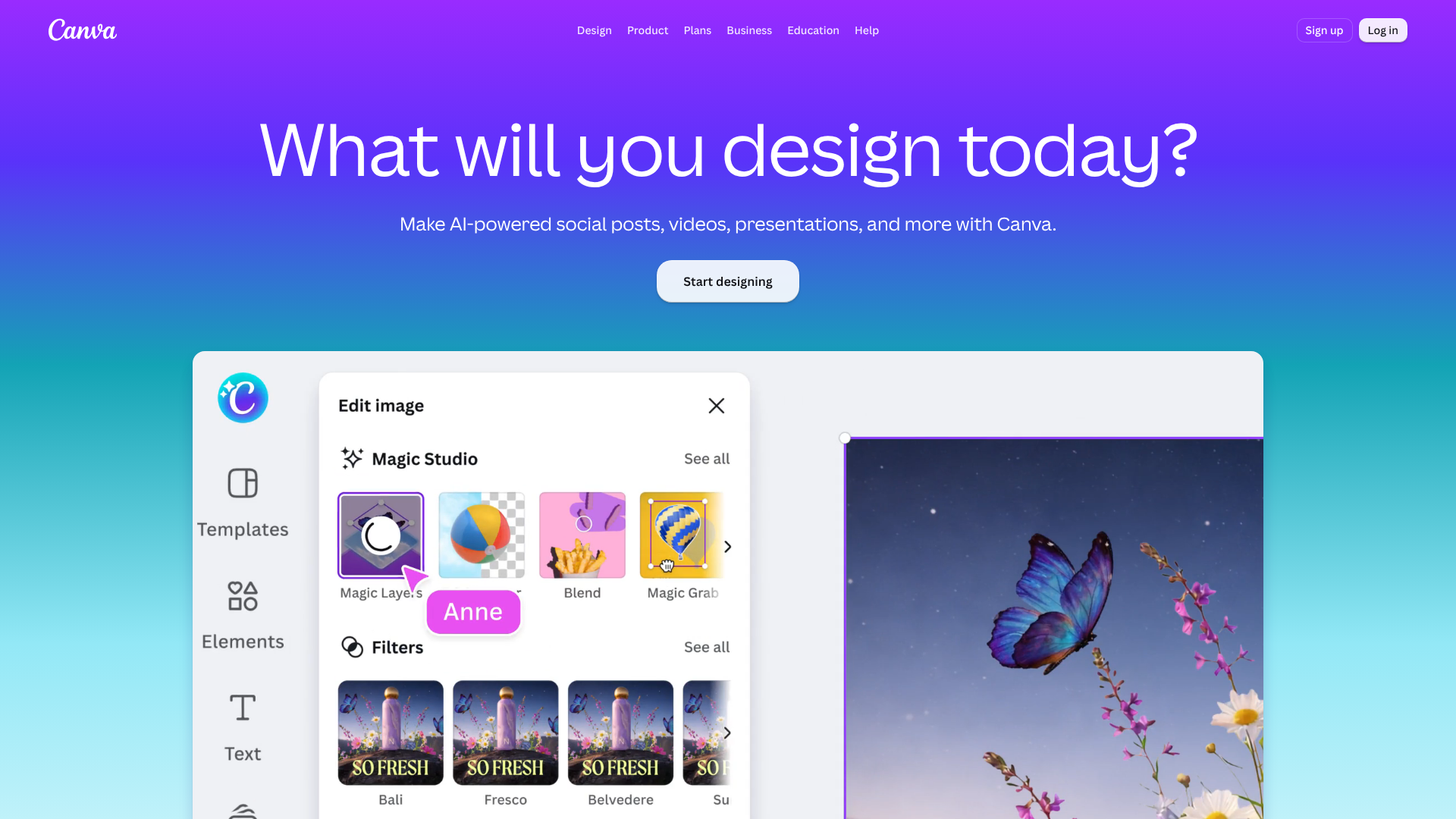
Most small businesses struggle with design. Canva flips that script. It's not just an online marketing platform; it's your design department in a box. The interface? Simple enough that you’ll wonder why you ever paid for graphic design services.
Tap into a vast array of templates, flyers, social media posts, business cards, you name it. Canva’s library helps even the most artistically challenged to look like a pro. The real magic lies in its drag-and-drop interface, which turns complex designs into a click-and-drop affair.
get Creative Potential Canva's Pro plan get advanced features like the background remover and magic resize, but even free users have access to thousands of templates and design elements that cover 80% of basic needs.
But remember, not everything is a freebie. Some features peek out from behind the Pro plan paywall. That's where Canva's limitation shows its face. Yet, for most small business marketing tools needs, the free plan suffices.
What many overlook are the extended features, integrating Canva with social media marketing tools, content marketing platforms, and email marketing software to simplify your digital advertising solutions. It's not just about creating graphics; it's about crafting a cohesive brand presence.
Ready to improve your social media strategy? Canva lays the groundwork for visual content, but to keep all gears in motion, you'll need a reliable scheduler. Enter Buffer, a social media scheduling tool that ensures your newly designed visuals reach your audience at peak times.
8. Buffer: Streamlined Social Media Scheduling
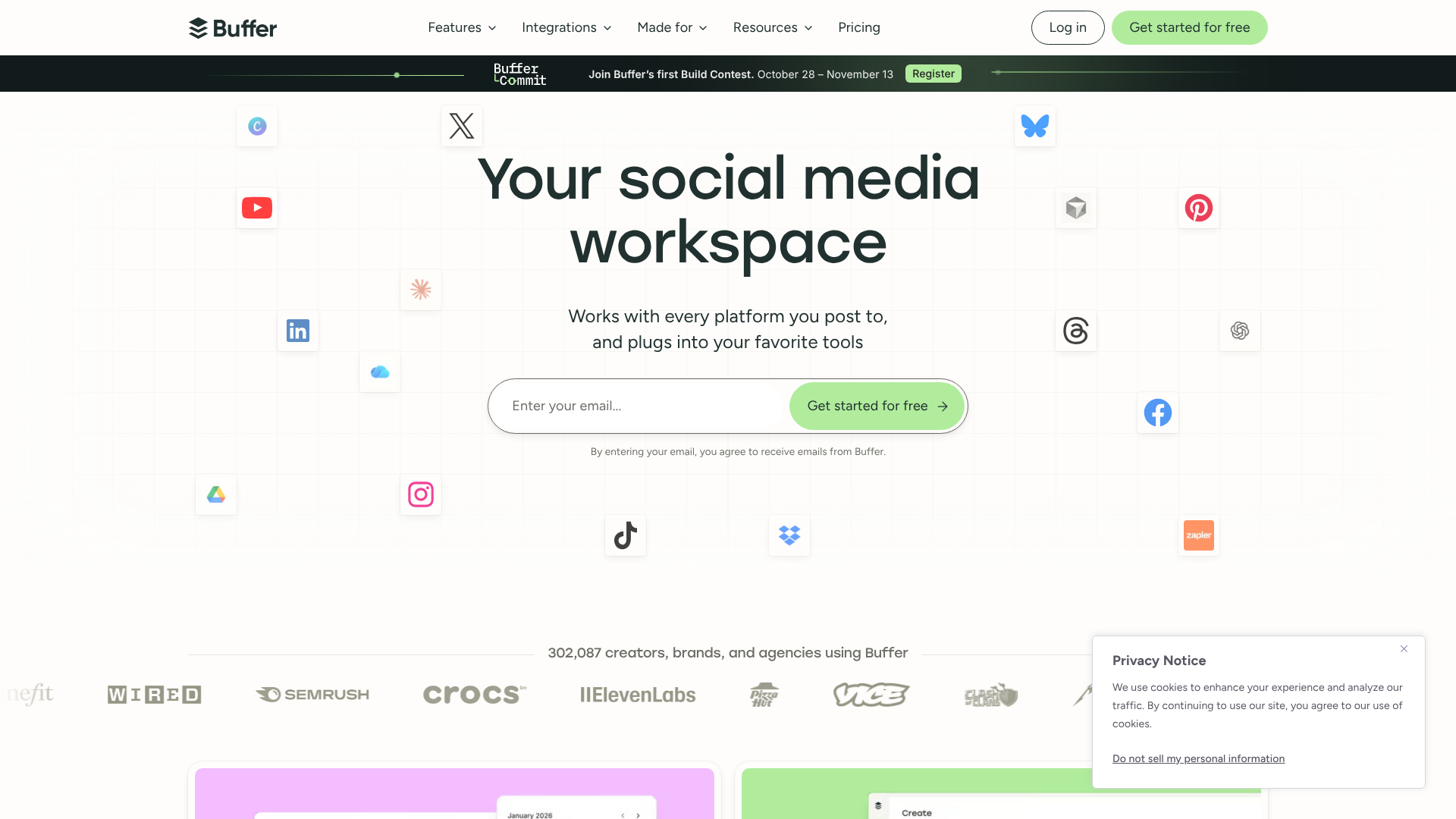
Most platforms overcomplicate what should be simple: scheduling social media posts. Buffer nails it with ease. Forget exhaustive features that leave small businesses overwhelmed. You just need a tool that lets you plan and publish, without fuss. Buffer offers straightforward scheduling, making it a smart choice for any small business investing in social media marketing tools.
Buffer’s pricing reflects its accessible approach. It doesn’t burden you with complex plans. Choose a package that aligns with your marketing needs and budget. For many, the free plan has enough room to cover basic scheduling across multiple platforms, a savings that can free resources for other digital advertising solutions. However, as you scale up, you'll find paid plans that remain budget-friendly, a rarity in online marketing platforms.
The catch? Basic analytics. Buffer provides simplified insights on post performance, but if you're diving deep into analytics tools or seeking comprehensive data, you might find it lacking. It's sufficient for gauging surface-level engagement, but for a look, you'll need a separate analytics powerhouse. This limitation is worth noting before buying in.
Don’t Underestimate Free Plans Buffer’s free plan can be enough for many small businesses. Use it fully before deciding to upgrade. That testing phase costs nothing but time.
Buffer’s greatest strength is letting you manage social media without the noise. Tools like Buffer let you focus on content creation and audience engagement. As you consider which platforms to invest in further, understanding pricing and features becomes essential. Up next, we’ll dissect that exact comparison with a detailed look at the features and pricing across digital marketing platforms.
Digital Marketing Platforms: Features & Pricing Comparison
Choosing the right digital marketing platform can make or break your small business marketing strategy. But here's the kicker: not all platforms are created equal, and what works like magic for one business might be a nightmare for another. To help you find the best bang for your buck, we've compared eight leading platforms.
Here's the full comparison:
| Tool/Option | Best For | Key Strength | Biggest Weakness | Starting Price | Free Plan? |
|---|---|---|---|---|---|
| HubSpot | Small Business Teams | All-in-one CRM | Complex setup | Free – Varies | Yes |
| Mailchimp | Email Campaigners | Comprehensive email tools | Limited automation | $13/mo | Yes |
| Shopify | E-commerce Stores | strong e-commerce features | Transaction fees | $39/mo | No |
| Google Analytics | Data Analysts | Deep insights | Steep learning curve | Free | Yes |
| SEMrush | SEO Enthusiasts | SEO and competitive analysis | Expensive | $129.95/mo | No |
| Hootsuite | Social Media Teams | Social media management | Pricey for small teams | $99/mo | No |
| Canva | Content Creators | Ease of use for design | Limited advanced features | Free – $12.99/mo | Yes |
| Buffer | Social Media Marketers | simplify scheduling | Limited analytics | $6/mo | Yes |
Beware of Hidden Costs Some platforms sneak in transaction fees or premium feature charges after the initial signup. Always read the fine print.
Every platform listed has its own unique strengths and challenges. For example, Mailchimp offers excellent email marketing features but falls short on automation compared to others. Meanwhile, Shopify's e-commerce tools are unparalleled, but watch out for its transaction fees. And while Google Analytics is free, its complexity can be a barrier.
Knowing these nuances arms you with the insights necessary to make informed decisions. Next, to "How to Pick the Right Platform for Your Business" to ensure you choose the one that best fits your needs.
How to Pick the Right Platform for Your Business
Picking a digital marketing platform isn't just about price. It’s about aligning features with your business goals. The shiny tool with a low sticker price often lacks the depth needed for real results. Price alone can steer you wrong. What you need is a platform that aligns with your strategy and genuinely supports your growth.
Start by considering your business goals. Are you aiming to boost social media engagement or enhance email marketing? Different goals require different tools. A platform heavy on social media marketing tools like Hootsuite might not be your best pick if your focus is email marketing. On the other hand, if email is your priority, you might explore the top email marketing platforms to see what aligns best with your needs.
ROI should be your yardstick. The best platform is one that yields a solid return on your investment, not just the cheapest. Track the impact of your online marketing platforms to ensure they deliver significant value. Customer support is another critical factor. No one needs an unresponsive vendor when facing issues. Platforms that offer strong customer support can save you time and losses down the line.
Real-World Mismatch Alert Don't let price tags fool you. A $10 monthly plan might lack features worth $100 in sales. Evaluate features against potential ROI, not just initial costs.
Avoid common pitfalls by evaluating platforms based on ROI, support, and how well they fit your specific goals. A failure mode here is choosing solely based on price, leading to compromised functionality and unmet expectations. When you align your choice with strategic outcomes, you stack the odds of digital marketing success firmly in your favor.
Frequently Asked Questions
Q1: What is the best digital marketing platform for small businesses?
The best platform depends on your specific needs, but HubSpot is often recommended for its comprehensive features and scalability.
Q2: How do small businesses benefit from digital marketing platforms?
Digital marketing platforms help small businesses increase online visibility, engage with customers, and track marketing performance effectively.
Q3: What features should I look for in a digital marketing platform?
Key features include user-friendly interfaces, integration capabilities, strong analytics, and strong customer support.
Q4: Are there affordable digital marketing platforms for small businesses?
Yes, platforms like Mailchimp and Buffer offer affordable plans with essential features for small businesses.
This article was researched and drafted with PrismSEO, then reviewed before publishing.