technical seo
6 Proven SEO Tools That Actually Work in 2026
Discover 8 SEO tools that boost rankings effectively in 2026. Find the right fit for your needs and enhance your strategy today.
Published: 8/2/2026
6 Proven SEO Tools That Actually Work in 2026
You've tried dozens of SEO tools, spent countless hours analyzing data, and still, your ranking stubbornly refuses to climb. Maybe you've poured over SERP statistics, or written content based on keyword advice from every available source. Yet, the needle isn't moving, and it's frustrating when every effort feels wasted.
Ignoring this issue could leave your business in the dust. With Google's algorithm changes rolling out faster than ever, relying on outdated strategies means you'll fall behind. Think of your competitors who are quickly adapting and dominating search results. Missing the boat on effective tools isn't just a setback; it's a business risk you're running, every single day.
By the end of this article, you'll know which SEO tools are truly worth your investment and how they fit smooth into your strategy. You'll discover the one change that could move your rankings within 60 days, covering everything from all-in-one platforms to advanced rank tracking systems. It's not just about having tools-it's about knowing exactly how to wield them for success.
Here's the kicker: most SEO lists lead you down the wrong path because they overlook how to bridge the gap between insight and execution. These six proven tools are exceptions that actually work in 2026 because they don't just offer data- they provide actionable strategies grounded in the latest algorithm updates.
⚡ Quick Answer
- 🏆 Best overall: Semrush: Comprehensive features for all SEO needs
- 💸 Best budget: Google Search Console: Free and essential for every SEO strategy
- 🚀 Best for content optimization: Surfer SEO: Aligns content with search intent efficiently
Why Most SEO Tool Lists Get It Wrong
SEO tool lists often mislead. They highlight outdated tools or ignore the changing space of search engine optimization. As algorithms evolve, so should your toolkit. Too many lists focus on features from years ago, leaving you with half-baked insights that won't improve your rankings in 2026.
Here's what to evaluate:
| Factor | What It Measures | Why It Matters | How to Evaluate It | Weight/Priority |
|---|---|---|---|---|
| Usability | Ease of navigation and user interface | Saves time and reduces learning curve | Trial the software interface | High |
| Cost | Price relative to budget | Ensures ROI and budget alignment | Compare against similar tools | Medium |
| Effectiveness | Ability to improve rankings | Direct impact on SEO results | Analyze case studies or user reviews | High |
| Update Frequency | How often the tool is updated | Stays relevant with algorithm changes | Check the tool’s update logs | Medium |
| Integration | Works with existing systems | simplify workflows | Test API or integration capabilities | Low |
The Hype vs. Reality
SEO software tools promise the moon. They boast about boosting rankings overnight with minimal effort. But the reality is that no tool alone can achieve that. Search engine optimization requires a blend of strategic planning, content creation, and continual adjustment. Many lists push tools based on hype rather than efficacy. In 2026, the tools that truly matter are those that adapt to real-time search algorithms. Not every tool lives up to its marketing claims, and your results will vary based on how well you use the tool's potential.
Price Tags Aren’t Everything Expensive SEO tools don’t guarantee better results. Evaluate effectiveness over cost. Free tools like Google Analytics offer insights that budget-heavy platforms might miss.
Evaluation Criteria
Effective SEO tools cover more than keyword research or backlink analysis. They should assist with content optimization, technical SEO, and rank tracking, reflecting the full SEO spectrum. Usability is crucial; a complex interface can bottleneck your operations. Cost is another factor, but don't let it cloud judgment: a high price doesn't always equate to high value. Regular updates ensure tools remain effective against evolving algorithms. Evaluate tools by running a crawl in Screaming Frog or checking Ahrefs DR scores to verify their promise against actual performance.
Shifting gears to evaluation, uniting your SEO strategy with the right tools can seem daunting. Yet, understanding what you're assessing brings clarity. Next, Here is how to evaluate SEO tools for your specific needs.
How to Evaluate SEO Tools for Your Needs
Usability
Don't overlook usability. A tool's interface can mean the difference between daily use and a forgotten subscription. An intuitive user interface minimizes the learning curve, letting you focus on strategy rather than fumbling with features. Don't get trapped in a labyrinth of settings. Simplicity often trumps complexity For long-term adoption.
| Factor | What It Measures | Why It Matters | How to Evaluate It | Weight/Priority |
|---|---|---|---|---|
| User Interface | Ease of navigation | Saves time and reduces frustration | Complete a specific task without tutorials | High |
| Learning Curve | Time to proficiency | Avoids resource drain on training | Onboard a new team member | Medium |
Cost vs. Value
SEO software tools range from budget-friendly to enterprise-level. The catch is balancing the cost with your feature needs. A lower-tier plan might exclude the very features you need. For instance, if you're paying $99 a month but missing advanced backlink analysis, reconsider your choice. The right tool should pay for itself.
| Factor | What It Measures | Why It Matters | How to Evaluate It | Weight/Priority |
|---|---|---|---|---|
| Pricing Models | Plans and tiers available | Ensures features align with budget | Match features to your specific needs | High |
| Feature Access | Availability of required features | Avoids paying for unused features | Compare plan details to feature list | High |
Feature Set
Not all features are created equal. Some tools offer extensive keyword research tools, while others shine in technical SEO audits. Match the tool’s strengths to your key focus areas. If rank tracking isn't crucial for you, paying extra for it is a waste. Choose a tool that strengthens your weakness, not adds to your pile of unused features.
Balance Your Backlog Overloading on features can distract from core goals. Prioritize tools that solve your pressing SEO challenges, not ones that covering everything.
Each of these elements plays a pivotal role in making an informed choice. Use the framework wisely to balance usability, cost, and features, ensuring the tool fits your strategy, not the other way around.
Understanding these criteria makes it easier to see why Semrush tops many lists. What's next is a look into what makes it the all-in-one powerhouse for SEO.
1. Semrush: The All-in-One SEO Powerhouse
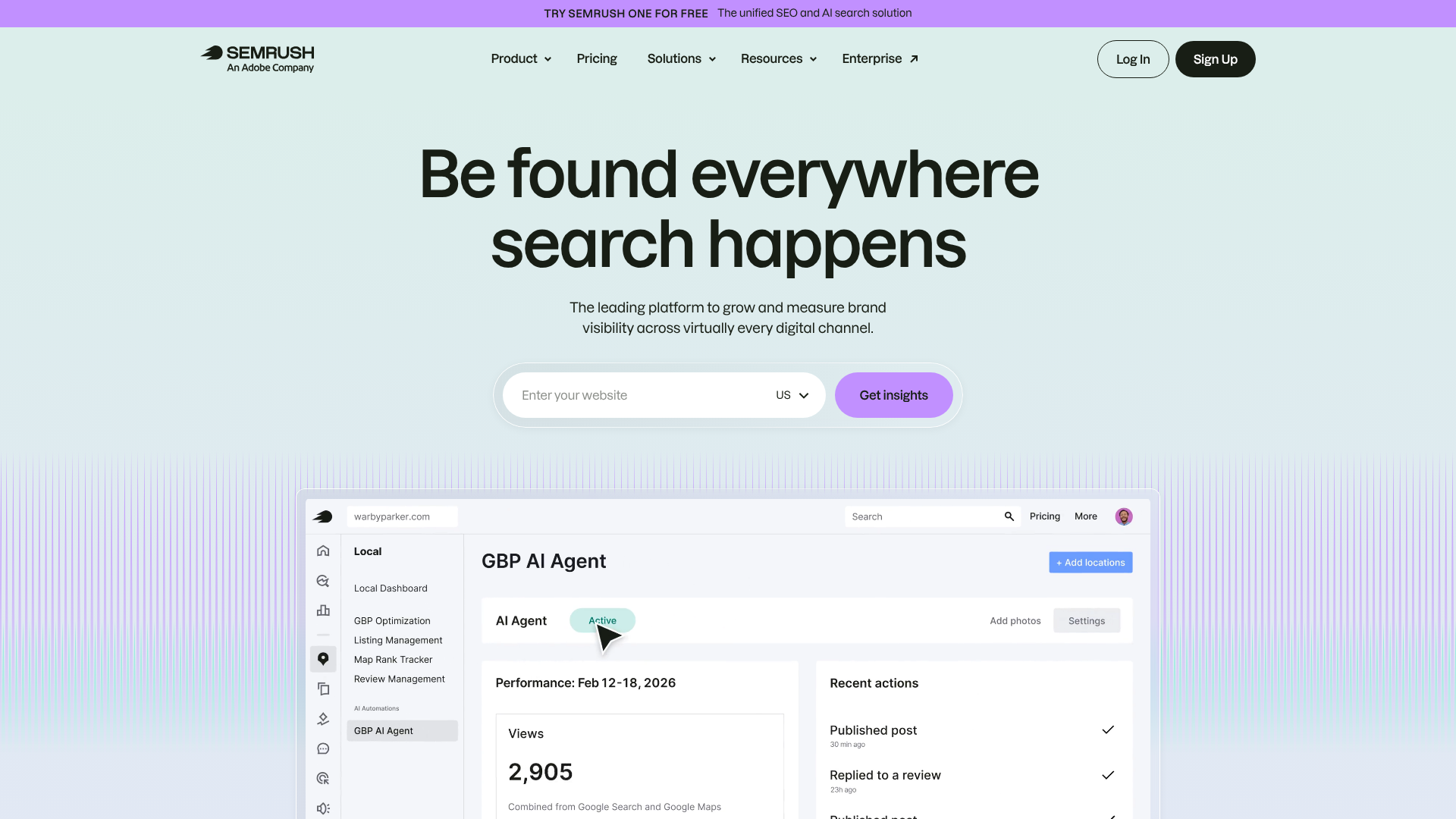
Best for Comprehensive SEO Management
Semrush isn't just another tool in your SEO arsenal; it's the entire toolbox. If you're serious about search engine optimization, this platform is essential. It combines keyword research, backlink analysis, rank tracking, and content optimization into one smooth package. Whether you need technical SEO tools or a strong SEO audit solution, Semrush has it covered. The platform's depth is unmatched, allowing you to integrate SEO, PPC, and content marketing strategies effectively.
However, Semrush's extensive capabilities can come with a hefty price tag. For small businesses or startups, the cost might be prohibitive. But don't let that deter you if your goal is comprehensive SEO management. Once you're committed, the investment pays off by enabling you to execute strategies that competitors can't easily replicate. The real challenge is not the learning curve but the budget constraints.
Missed Opportunity Warning Focusing only on keyword research is a misuse of Semrush. Its strength lies in multi-faceted SEO management. Don't buy it and use just 10% of its capabilities.
That gap, between understanding what Semrush offers and how effectively you use it, is where many businesses falter. The best results come when you use every tool it provides, from content creation to technical audits. Semrush is the leading platform to grow and measure brand visibility across AI search, SEO, PPC, social, and more. It's your all-in-one solution - if you're willing to make full use of it.
Ready to get started? Mastering Semrush is just the beginning. Next up, Here is the absolute essentials you can access for free with Google Search Console. It doesn't offer the bells and whistles, but it gives you the raw data you can't afford to ignore.
2. Google Search Console: The Essential Free Tool
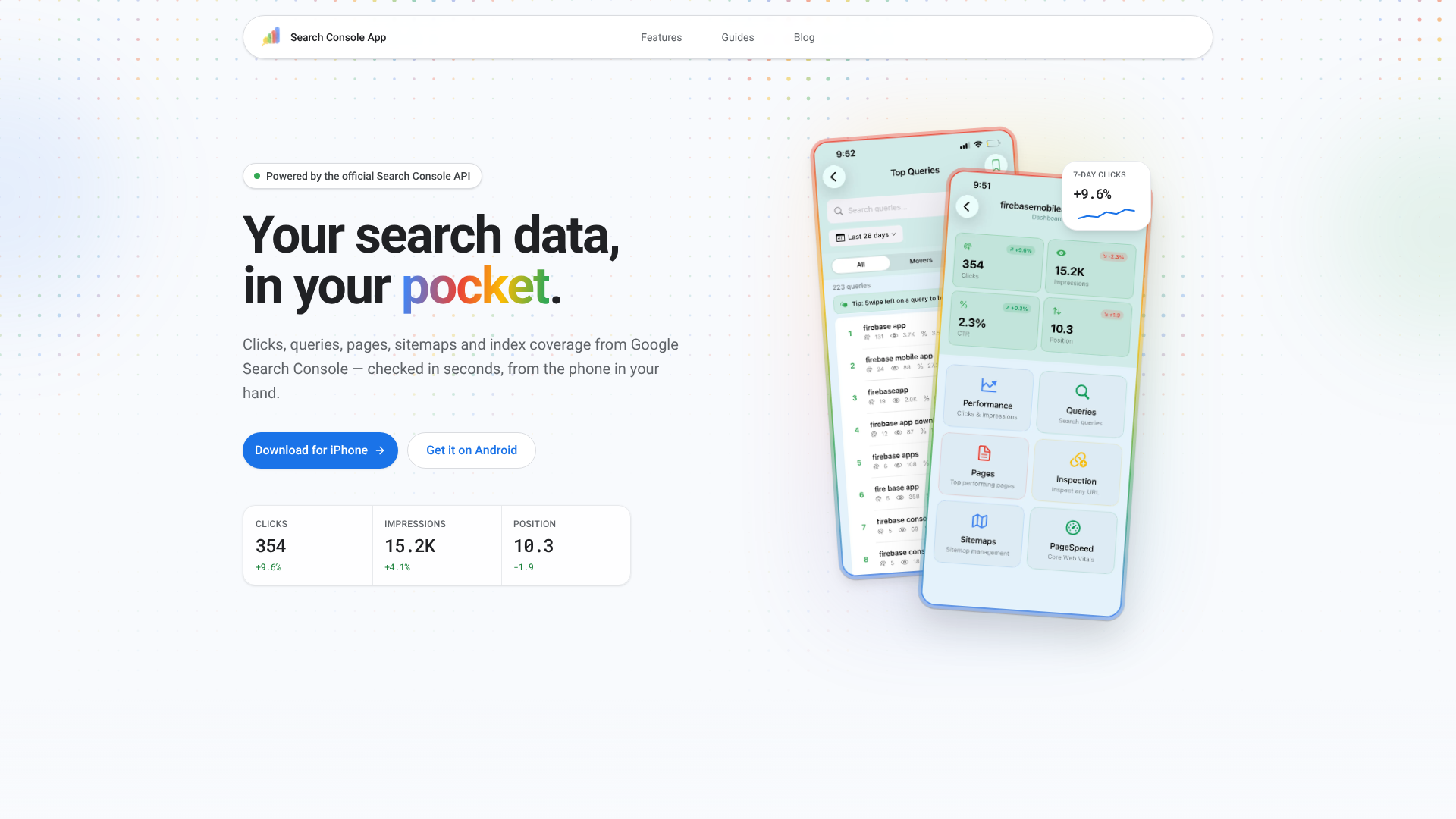
Best for Beginners and Budget-Conscious
Google Search Console is the unsung hero of SEO. It's free and taps directly into Google's indexing and ranking data, making it essential for beginners and those watching their budgets. You won't find a price tag here, but this tool gives you access to Google's insights straight from the source: your site data.
Here's the catch: compared to paid SEO software tools, the feature set is more limited. Google Search Console won't hand you advanced keyword research tools, backlink analysis, or automated SEO audit tools. It's not built for that. Instead, it excels at providing transparency. You'll gain insights into which queries drive traffic to your site and how Google views your content for ranking.
Most search engine optimization tools overload you with features, but Search Console keeps it straightforward. You see what affects your site's rank tracking in real time. If your pages aren't getting indexed, or if organic performance tanks, this is where you start. It's a reality check in a neat package.
Begin at Square One Always verify your site with Google Search Console first. This step is often skipped but critical for accessing accurate indexing data.
Of course, limitations exist. You won't get in-depth content optimization strategies or technical SEO tools that paid platforms offer. That's the trade-off. It's a fundamental step in any SEO toolkit, but you'll need to pair it with broader applications for a full-fledged strategy. For more advanced needs, consider blending Search Console data with insights from other SEO software tools like Screaming Frog or PageSpeed Insights.
Once you've squeezed every insight from Google Search Console, it's time to scale up. You need a tool that turns data into actionable content strategies. That's where Surfer SEO comes in to help you master content optimization.
3. Surfer SEO: Master Content Optimization
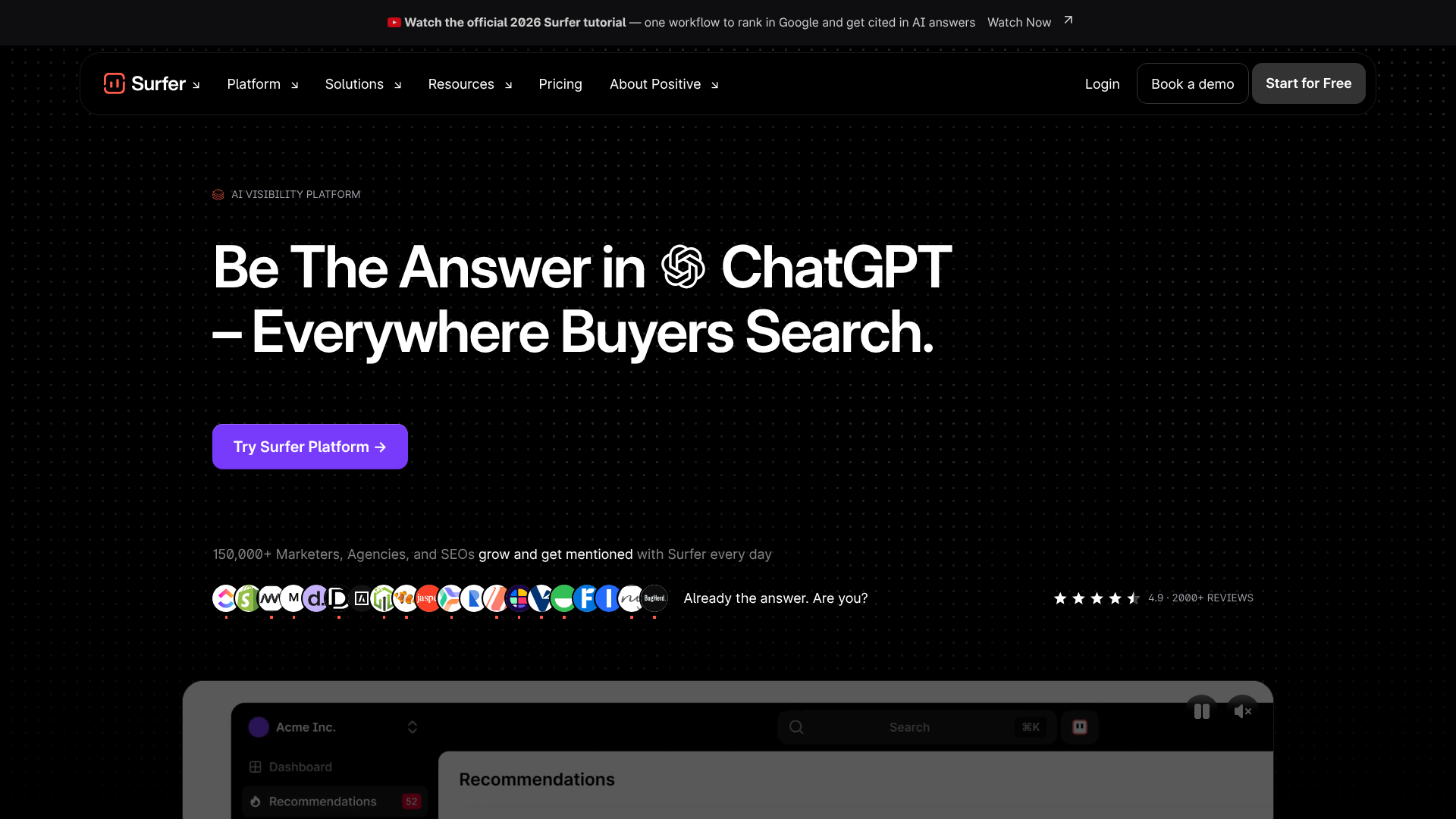
Best for Content Strategy
Most content strategies crumble because they misunderstand search intent. Surfer SEO nails this alignment, crafting content that both Google and users love. But fair warning: Surfer's full power only get with a paid subscription. It's not just another SEO software tool; it's a crucial ally in search engine optimization. By leveraging its insights, you can finally bridge the chasm between content creation and the elusive page-one ranking.
The catch? You need to pay for the comprehensive features. Surfer's pricing isn't prohibitive, but it's a consideration. Think of it as an investment in clarity - the kind that drives effective content strategies and, business growth.
Intent Before Keywords Always prioritize aligning content with search intent over mere keyword saturation. Surfer helps decode this alignment with precision.
Aligns Content with Search Intent Effectively
What sets Surfer apart is its ability to tailor content creation to match search intent, not just keyword stuffing. It uses data from top-performing pages to build a clear framework for content that resonates with both search engines and users. This approach ensures that your content isn't just seen; it's valued.
However, the platform demands a learning curve. Without understanding how to fully use its insights, you might underutilize its full potential. Mastering Surfer means understanding not just the "what" but the "why" behind recommended changes.
Requires Subscription for Full Features
get Surfer's full potential indeed requires a financial commitment. While there's a limited version available for free, the real magic happens with a subscription. This isn't just an SEO audit tool - it's a comprehensive content optimization weapon that delivers tangible results.
Subscription plans begin at a competitive rate, aligning with the value offered. When you compare the cost to the confusion saved and the clarity gained, it's an obvious win for serious marketers.
But all these content insights don't mean much if you ignore the backlinks. That's where the real power in ranking lies, and it's where Ahrefs takes the stage as the king of backlink analysis.
4. Ahrefs: The King of Backlink Analysis
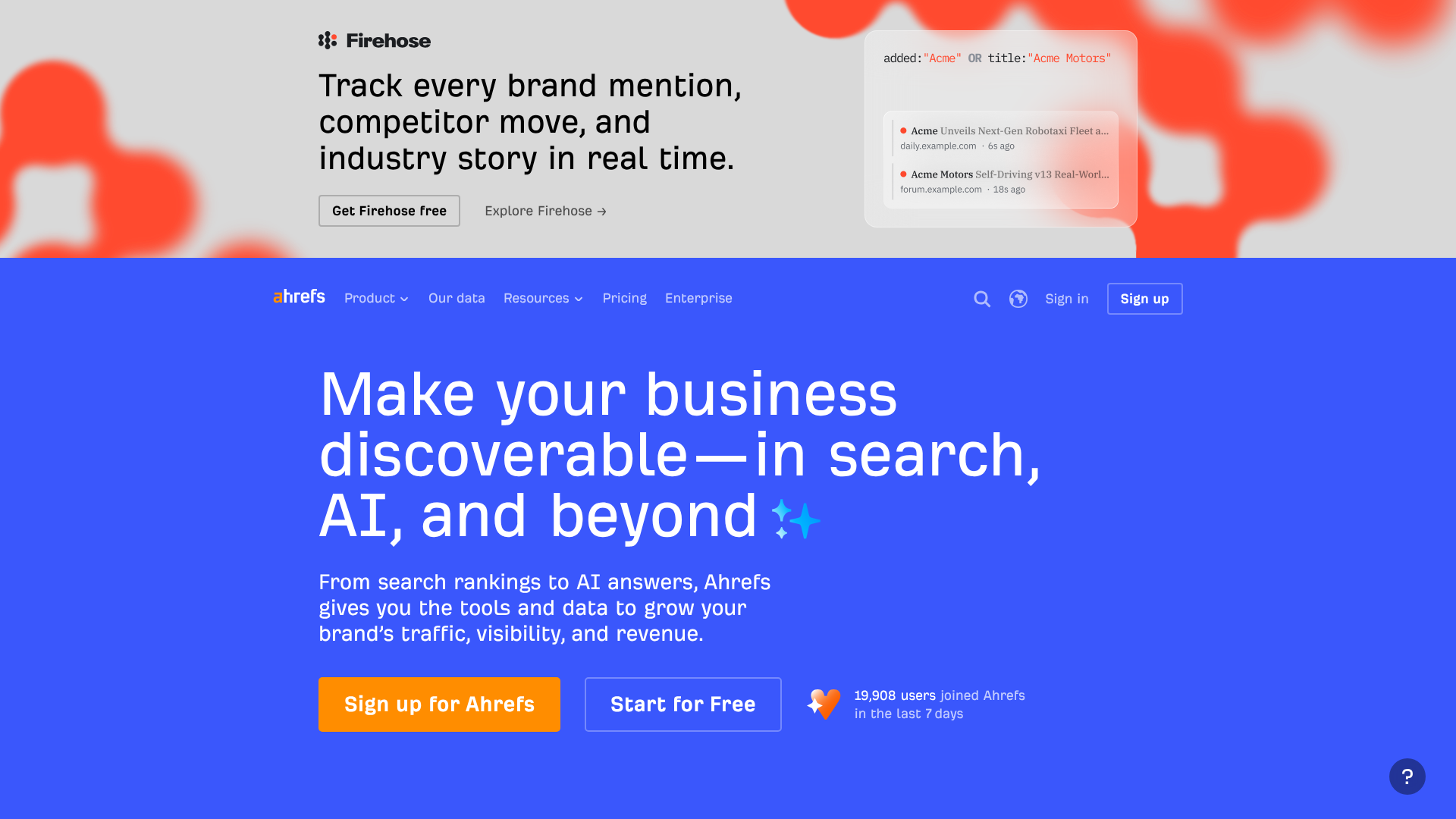
Best for Competitive Analysis
Backlinks make or break SEO. Ahrefs dominates backlink analysis with its vast data index and strong competitor insights. It’s not just about quantity; Ahrefs lets you dissect link growth, anchor texts, and domain authority-all critical for a comprehensive SEO strategy. When you’re aiming to capture market share, knowing where your competitors are winning is essential. Ahrefs equips you with the granular data needed to form a tactical blueprint.
The power of Ahrefs lies in its ability to deliver detailed competitor analysis, making it an essential tool for SEO professionals. But prepare your budget-Ahrefs comes at a higher price point than many SEO software tools. An investment in Ahrefs offers a wealth of backlink data that change your strategic planning.
Why Ahrefs is essential for SEOs Without Ahrefs, you'd miss the depth of backlink data needed to outperform competitors. Its vast index and precise metrics illuminate paths others overlook.
Despite its cost, the precision and breadth of Ahrefs’ dataset provide unmatched value for those serious about search engine optimization. If budget constraints are a concern, consider this pricing as a strategic outlay toward long-term growth. The alternative? Blind spots in your SEO plan.
Now that you’ve got a handle on backlinks with Ahrefs, you’ll want real-time updates on your ranking positions. Here is why Nightwatch could be the advanced rank tracking solution you need next.
5. Nightwatch: Advanced Rank Tracking
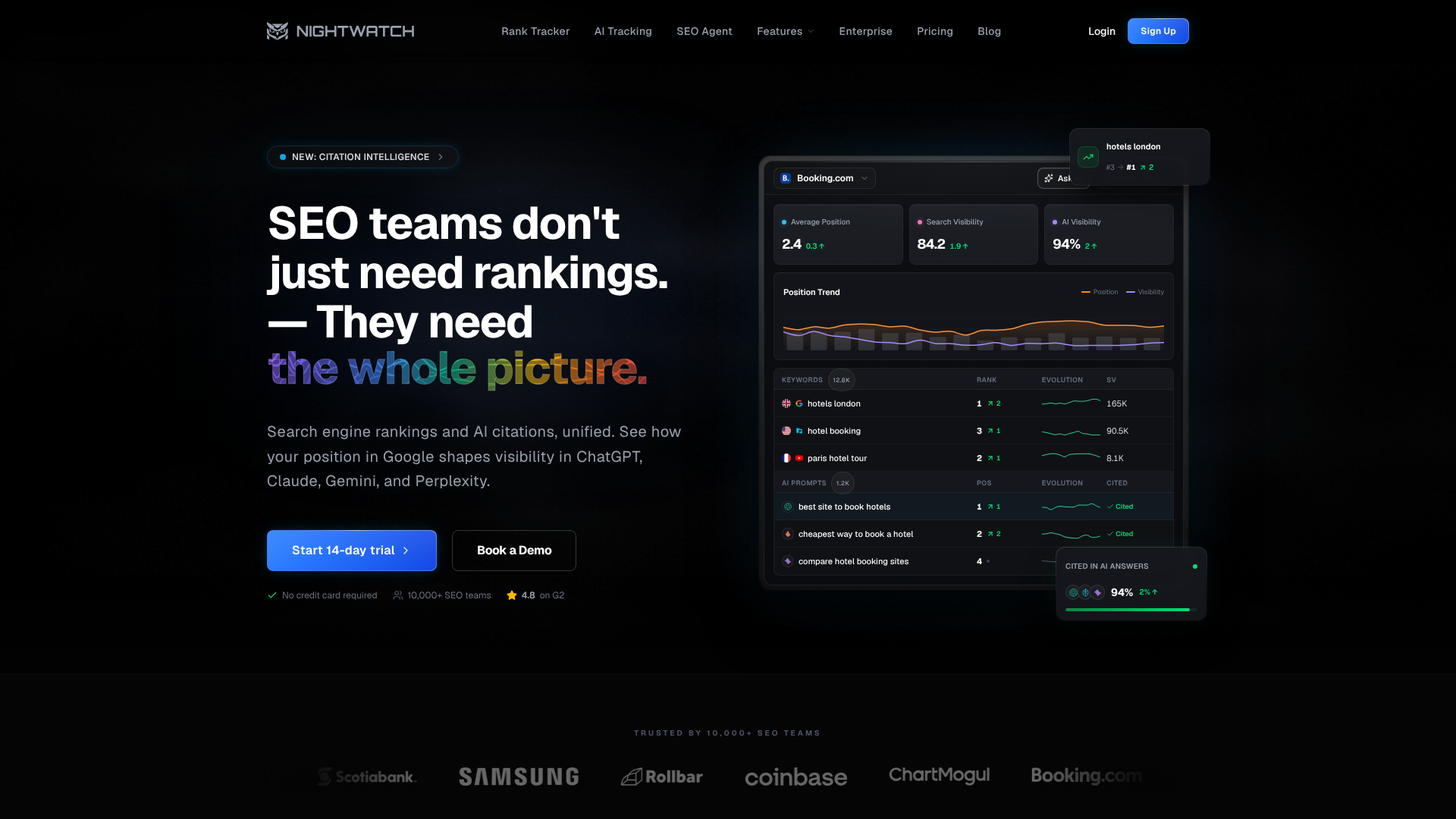
Best for Detailed Rank Insights
Most rank trackers overwhelm with surface-level data. Nightwatch dives deeper. Its advanced rank tracking offers granular insights that other SEO software tools barely touch. Imagine knowing not just where your keywords rank, but why they fluctuate. Nightwatch provides daily updates on over 100,000 locations, giving you unparalleled visibility into your search engine optimization efforts.
But there's a catch: complexity. Beginners might struggle with its strong feature set. It's not just a plug-and-play solution. Learning how to wield its full arsenal is a commitment. Yet, for those who do invest the time, the payoff in detailed rank insights is substantial.
Understand Your Data, Don't Drown in It Nightwatch’s detailed reports require a learning curve. If you're not ready to dive deep, start light. Use its AI-driven insights to guide your focus while scaling your expertise.
Nightwatch excels by offering more than simple keyword tracking. It integrates smooth with your existing SEO set of tools, enabling comprehensive SEO audits and content optimization strategies. Whether it's keyword research tools or technical SEO tools, it's the ability to connect the dots that sets Nightwatch apart.
For seasoned SEO professionals, Nightwatch is a powerhouse. According to a recent review, it's recognized as the go-to tool for tracking and understanding ranking dynamics in 2026. If your goal is to refine your strategy with precise data, you need a tool like Nightwatch.
Next, Here is a tool that gamifies SEO insights, making the complex world of rank tracking not just manageable but engaging, with Morningscore's unique approach.
6. Morningscore: Gamified SEO Insights
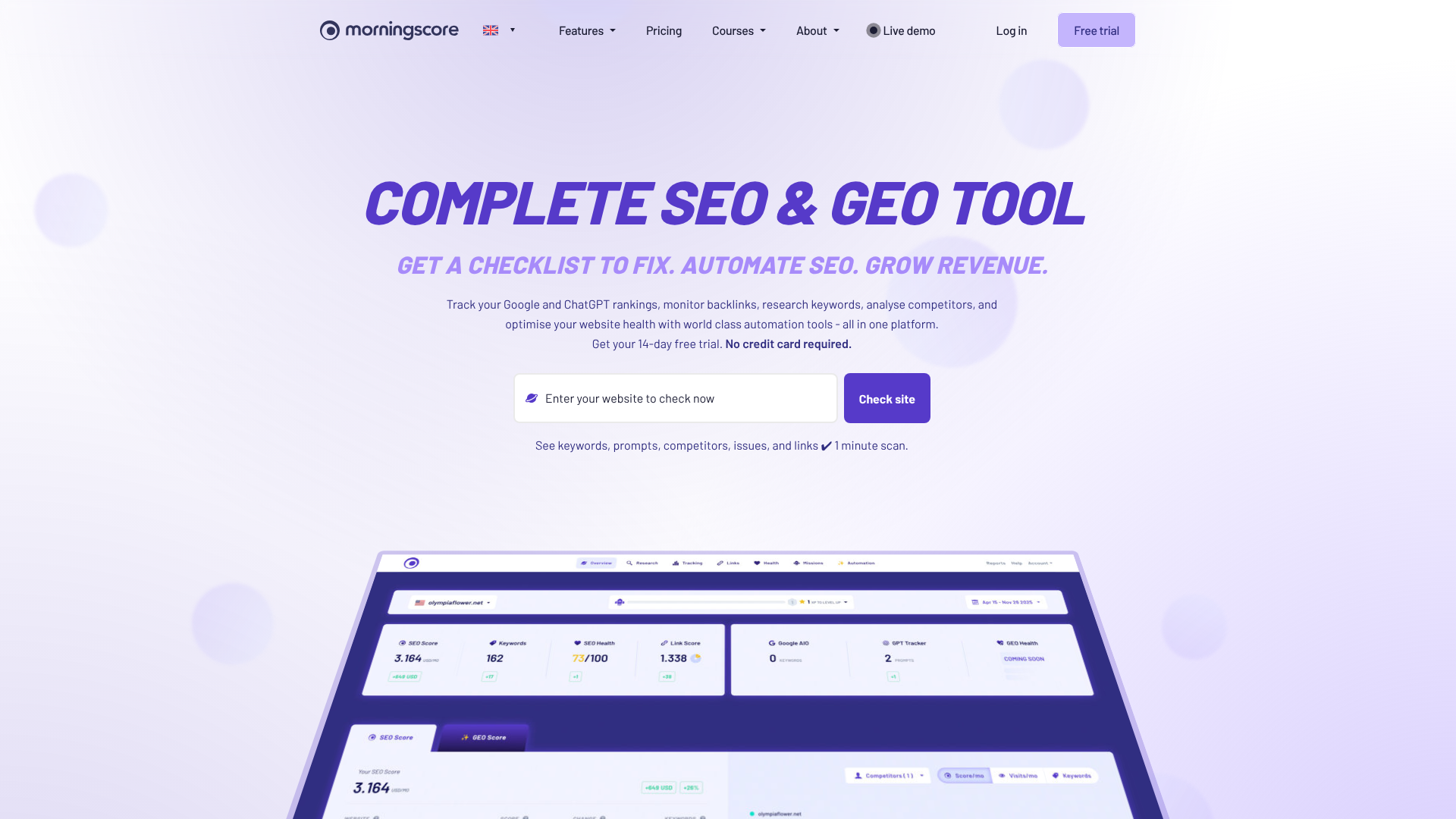
Best for Engaging SEO Management
SEO tools often feel like a chore. But Morningscore makes a difference with a unique gamified approach. Instead of overwhelming dashboards, it turns SEO into a mission-driven endeavor. Each task and achievement in your SEO process becomes part of an interactive game-like experience. This approach injects motivation into the SEO process, making tedious tasks engaging.
The tool covers essentials like keyword research, backlink analysis, and rank tracking, yet it’s less comprehensive than some competitors. Morningscore simplifies complex metrics into easy-to-digest missions, targeting marketers who thrive on goal-oriented strategies. However, if deep-dives into technical SEO and exhaustive data analysis are your priority, you might find yourself wanting more.
Game-Driven SEO Strategy Morningscore’s gamification change SEO tasks into missions. For teams struggling to stay engaged, this approach can shift workflows from monotonous to motivating.
At a starting price of $69/month, Morningscore is budget-friendly, appealing especially to small businesses and individuals looking to make SEO management more engaging and less daunting. It's not the tool for exhaustive SEO audits, but it shines in keeping your team motivated. For those who want to explore more about Morningscore’s gamified features, Morningscore offers a free 14-day trial.
As we've dissected how Morningscore gamifies SEO, understanding the specific features and pricing of various tools becomes crucial. See how it compares to others in the "SEO Tools: Features & Pricing Comparison" next.
SEO Tools: Features & Pricing Comparison
Understanding the features and pricing of SEO tools is crucial for making informed decisions that maximize your budget and impact. Many tools promise comprehensive SEO solutions, but their value can only be measured against your specific needs and financial constraints. Here's the full comparison:
| Tool/Option | Best For | Key Strength | Biggest Weakness | Starting Price | Free Plan? |
|---|---|---|---|---|---|
| Semrush | Enterprise teams | Comprehensive keyword research | High cost for smaller teams | $129.95/mo | No |
| Google Search Console | Beginner SEOs | Direct integration with Google data | Limited advanced analytics | Free | Yes |
| Surfer SEO | Content creators | Content optimization guidance | Complex interface for new users | $49/mo | No |
| Ahrefs | Backlink analysts | Powerful backlink analysis | Expensive for small budgets | $99/mo | No |
| Nightwatch | Rank tracking enthusiasts | Advanced rank tracking | Complex setup process | €79/mo | No |
| Morningscore | Gamification lovers | Engaging gamified insights | Less strong in-depth tools | $69/mo | No |
Each tool brings distinct features to the table, catering to various aspects of search engine optimization. For example, many choose Semrush for its strong keyword research capabilities, though its cost can be prohibitive. On the other hand, Google Search Console offers direct and free insights straight from the source, but it lacks the more advanced features found in paid tools. Surfer SEO excels at content optimization but requires a learning curve that might initially challenge beginners.
Key Decision Factor Your choice should hinge on whether you need advanced analytics or core functionality. For example, Ahrefs remains unbeaten in backlink analysis but comes with a hefty price tag-worth it if backlinks are your focus, but overkill if not.
your goal is to align your toolset with your strategy and budget. Recognizing the strengths and weaknesses of each option helps clarify which tool offers the best value for your needs. This understanding sets the stage for choosing the right SEO tool, which we'll tackle next, aligning strategy with capability to ensure the best outcomes for your investment.
How to Pick the Right SEO Tool for Your Situation
Choosing the right SEO tool isn't just about features. It's about aligning with your strategy and anticipating future needs. Too many businesses get dazzled by the promise of modern features, only to realize later they don't fit their SEO roadmap. The tool you choose must integrate smooth into your current workflow and be ready to scale with you.
Start by assessing what your SEO strategy really requires. If your primary focus is keyword research, tools like Semrush or Ahrefs are essential for uncovering hidden opportunities. However, if you're diving into backlink analysis, Majestic or LinkMiner might serve you better. Remember, no tool does it all perfectly. Understanding your precise needs helps narrow the field.
Next, think about scalability. Your SEO needs will change as your business grows, so select software that can expand its capabilities. For instance, a small startup might be well-served by a basic plan from Nightwatch, but as content optimization demands increase, a more strong plan might become necessary. Anticipate this growth to avoid outgrowing your tools prematurely.
Cost is always a factor, but it shouldn't be the only one. The cheapest option might limit you in critical areas, while the most expensive might come with unnecessary features. Evaluate the pricing plans in light of what each tool offers and match this to your intended spend. Consider also hidden costs, such as training or additional features that aren't included in the initial price.
Don't Overlook Integration The best SEO tools are those that integrate effortlessly with your existing systems. Whether that's your CRM, analytics platform, or publishing workflow, smooth integration saves time and reduces the risk of data silos.
Finally, perform a test run. Most SEO software tools offer trial periods; use them to dive deep and see if the tool meets your expectations in real-world scenarios. This also allows you to gauge user experience, support, and ease of use-all critical components when choosing the right tool.
Finding the right SEO tool is about aligning your choice with your specific needs while considering future scalability. It's not a decision to rush, but one that should be approached with a clear understanding of your strategic objectives. Choose wisely. Your search engine optimization efforts depend on it.
Where Traditional SEO Tools Fall Short
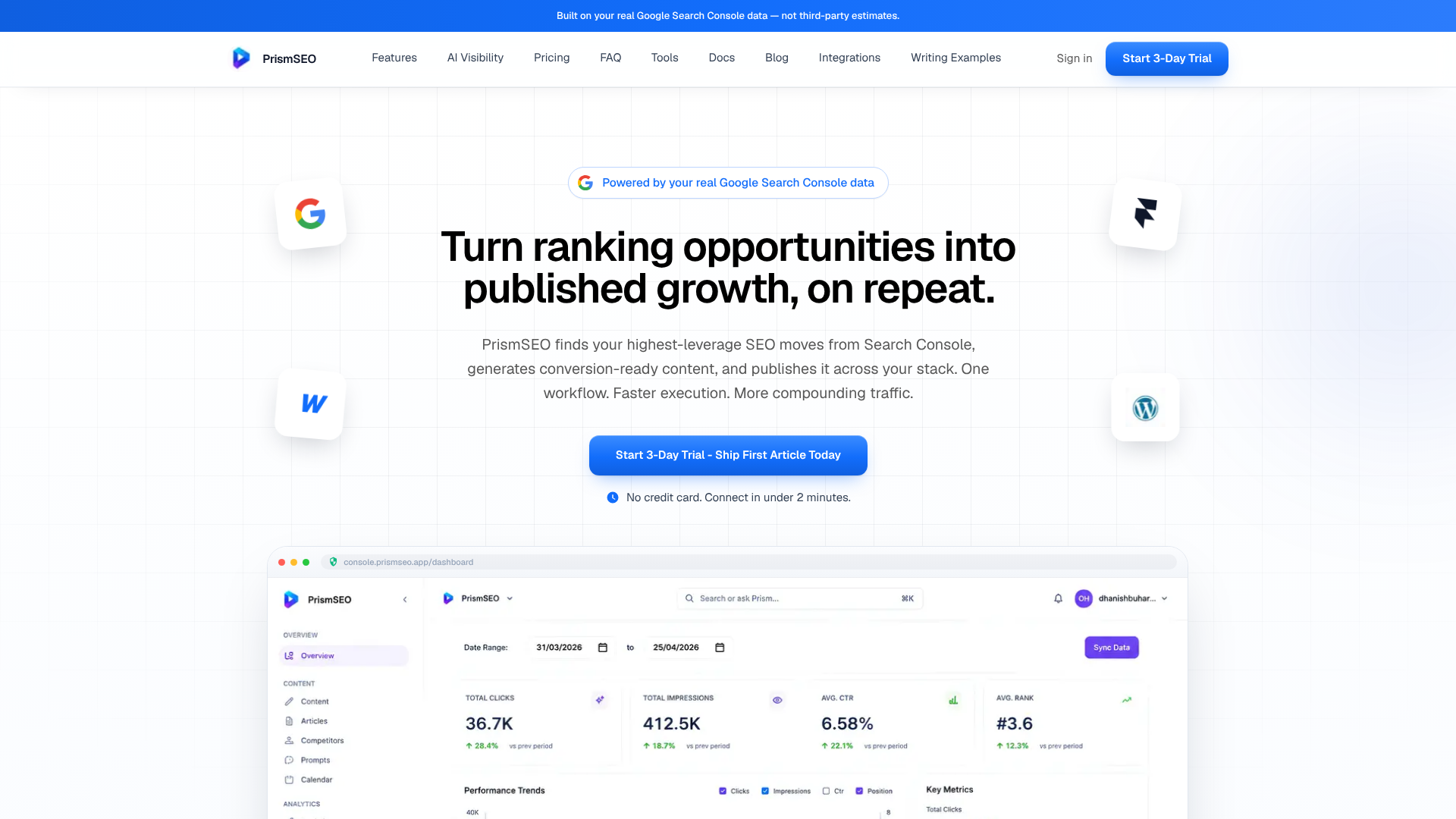
Each tool on this list excels in its own right. Google Search Console offers valuable direct data insights, while Ahrefs provides a strong competitive analysis suite. Yet, these platforms stop short of change data into published content. The real bottleneck? Turning practical tips into actual web pages that drive growth. This is where we built PrismSEO to tackle an entirely different challenge. Unlike other tools that require manual execution, PrismSEO integrates your Google Search Console data to prioritize SEO opportunities, generate expert-level articles, and simplify publishing into a single, cohesive workflow. With PrismSEO, your team can change keyword signals into published growth consistently, freeing you to focus on strategy rather than execution.
Frequently Asked Questions
Q1: What are the best SEO tools for 2026?
The best SEO tools for 2026 include Semrush, Google Search Console, and Surfer SEO, each offering unique features for different needs.
Q2: How do I choose the right SEO tool?
Consider your budget, feature needs, and the tool's usability. Evaluate each tool based on your specific SEO goals.
Q3: Are free SEO tools effective?
Yes, tools like Google Search Console offer essential insights for free, but paid tools provide more comprehensive features.
Q4: Which SEO tool is best for beginners?
Google Search Console is ideal for beginners due to its ease of use and essential features.
This article was researched and drafted with PrismSEO, then reviewed before publishing.